


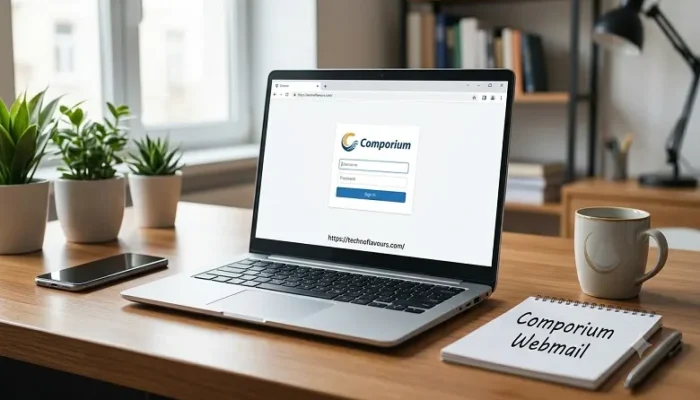
Comporium Webmail gives users a simple way to access their Comporium.net email accounts through a web browser. It can be used to read and send emails, organize messages, manage folders, and access an inbox without installing a separate email program.
However, users sometimes face problems with Comporium Webmail login, password errors, missing emails, or email applications that suddenly stop sending or receiving messages.
This guide explains how Comporium Webmail works, how to log in, how to configure the account on different devices, and what to check when common email problems occur.
What Is Comporium Webmail?
Comporium Webmail is the browser-based interface for Comporium email accounts. Instead of configuring an email client such as Outlook, Apple Mail, or another application, users can access their mailbox directly through a compatible web browser.
Webmail is particularly useful when accessing email from a different computer or when troubleshooting a device-specific problem.
For example, if messages appear normally in Webmail but not in an email application, the problem is more likely to be related to that application’s configuration rather than the email account itself.
Comporium Webmail Login: How to Access Your Account
The Comporium Webmail login process is relatively straightforward. You need an active email account and the correct password.
To sign in:
- Open a modern web browser.
- Navigate to the current Comporium Webmail login page.
- Enter your Comporium email address or required username.
- Enter your email password.
- Select the login or sign-in option.
- Wait for your mailbox to load.
If you use a personal computer, your browser may offer to save the login information. Avoid saving email passwords on shared or public devices.
If your old bookmark no longer opens the correct login screen, locate the current Webmail access page rather than entering your password on an unfamiliar page.
Understanding the “www.comporium.net Webmail” Search
Many users search for www.comporium.net webmail when they want to access their email account.
It is important to understand the difference between an email domain and a Webmail interface.
A Comporium email address may use the @comporium.net domain, while the Webmail system is the browser interface used to access that mailbox. The domain name itself should not automatically be treated as the Webmail login address.
This distinction is useful when dealing with old bookmarks or search results that may no longer point to the correct login system.
Comporium Email Settings
Users who prefer Outlook, Apple Mail, or another email application need the appropriate incoming and outgoing mail server settings.
Here is a quick technical overview:
| Setting | Configuration |
| Email domain | @comporium.net |
| IMAP server | mail.comporium.net |
| IMAP port | 993 |
| IMAP security | SSL |
| POP3 server | mail.comporium.net |
| POP3 port | 995 |
| POP3 security | SSL |
| SMTP server | smtp.comporium.net |
| SMTP security | SSL |
| Authentication | Required |
| Username | Full email address |
The email account password is normally used when the application requests authentication for incoming or outgoing mail.
IMAP vs. POP3: Which Should You Use?
IMAP is designed to keep the mailbox synchronized with the mail server. If you read, delete, or organize an email on one device, those changes can be reflected on other devices.
This makes IMAP practical when the same account is used on a phone, laptop, and desktop computer.
POP3, by comparison, is primarily designed to download email from the server to an email application. Its behavior can depend heavily on whether the application is configured to leave copies of downloaded messages on the server.
For most multi-device setups, IMAP provides a more convenient experience.
Setting Up Comporium Email in Outlook
If automatic account detection does not configure the account correctly, Outlook allows users to enter the mail server details manually.
Start by adding a new email account and enter your full Comporium email address. Choose IMAP if you want your mailbox to remain synchronized across devices.
For incoming mail, enter mail.comporium.net and use port 993 with SSL.
For outgoing mail, enter smtp.comporium.net and make sure authentication is enabled. Use your complete email address as the username.
Once the settings have been saved, send yourself a test email. This checks both incoming and outgoing communication.
If you can receive messages but cannot send them, focus your troubleshooting on the SMTP settings.
Setting Up Comporium Email on iPhone
Comporium email can also be added to the Mail app on an iPhone.
Open the account section in the iPhone settings and choose the option to add another mail account. Enter your name, Comporium email address, password, and an account description.
For an IMAP configuration, use:
Incoming mail server: mail.comporium.net
Incoming port: 993
Security: SSL
For outgoing email, use smtp.comporium.net and ensure that authentication is enabled.
Your full email address should normally be entered as the username.
After completing the setup, test both sending and receiving email before assuming the configuration is complete.
Setting Up Comporium Email on Android
The exact process on Android depends on the email application and phone manufacturer, but the required information is similar.
Add a new email account and select manual configuration if automatic setup fails.
Choose IMAP, enter mail.comporium.net as the incoming server, use port 993, and enable SSL.
For outgoing messages, use smtp.comporium.net with authentication enabled.
Once the account is added, allow a few moments for the mailbox to synchronize, particularly if the account contains a large number of messages.
Comporium Webmail Login Not Working
A Comporium Webmail login problem does not always mean that the email service is unavailable. Incorrect credentials, saved browser information, connection problems, and outdated bookmarks can produce similar symptoms.
Start by checking the email address carefully. A small spelling mistake can prevent authentication.
Next, enter the password manually instead of relying on a saved password. If the password was recently changed, your browser may still be filling in the previous one.
You can also try opening the login page in a private or incognito window. If it works there, stored cookies or cached browser data may be contributing to the problem.
Trying another browser or device can further narrow down the cause.
What to Do If You Forgot Your Password
If you cannot remember your email password, repeatedly guessing it is not a good troubleshooting method.
Use the available account recovery or password-reset process associated with the account. You may need to verify account information before a password can be changed.
After changing the password, remember that any connected devices may still have the old password saved.
Update the password in Outlook, your phone, tablet, or any other email application connected to the account.
Otherwise, those devices may continue showing authentication errors even though the new password works in Webmail.
Comporium Email Not Sending
If you can receive messages but cannot send them, the outgoing SMTP configuration should be one of the first things you check.
Confirm that the outgoing server is smtp.comporium.net and that SMTP authentication is enabled.
The username should be the complete email address, and the saved password must match the current account password.
Also check the SMTP port and encryption settings required by your particular device configuration.
An easy diagnostic test is to send an email through Webmail. If the message sends successfully from Webmail but fails from Outlook or your phone, the problem is probably related to the application’s SMTP configuration.
Comporium Email Not Receiving Messages
When incoming messages stop appearing, first check the inbox through Webmail.
If the missing messages appear there, your email account is receiving mail and the issue is probably related to synchronization on the affected device.
For an IMAP account, verify that the incoming server is mail.comporium.net, the port is 993, and SSL is enabled.
You should also check the Spam or Junk folder. Email filtering systems can occasionally move legitimate messages away from the main inbox.
If messages are missing from both Webmail and your email application, investigate mailbox storage, filtering rules, account status, or a possible service interruption.
Common Comporium Webmail Problems and Fixes
Here is a simple troubleshooting reference for common issues.
| Problem | What to Check |
| Cannot log in | Username, email address and password |
| Login page keeps refreshing | Browser cache and cookies |
| Webmail does not load | Browser and internet connection |
| Cannot receive messages | IMAP/POP3 configuration |
| Cannot send messages | SMTP configuration and authentication |
| Phone stopped syncing | Password and IMAP settings |
| Outlook asks for password repeatedly | Saved credentials |
| Messages are missing | Spam, folders and synchronization |
| Attachment fails | File/message size |
| Multiple devices fail | Account or service-level problem |
Checking the simplest causes first can save time before changing advanced settings.
Emails Missing from Comporium Webmail
An email that appears to be missing may still be stored elsewhere in the mailbox.
Start with the Spam or Junk folder. Then check any custom folders you have created and use the mailbox search function to look for the sender, subject, or a distinctive phrase from the message.
Filters and rules are another possible cause. A rule may automatically move certain messages into another folder.
Also check whether another email program is accessing the account through POP3. Depending on its settings, a POP3 application may download messages in a way that affects how they remain available on the server.
Comporium Webmail Is Working but Outlook Is Not
This situation is particularly useful for troubleshooting.
If you can successfully log in through Comporium Webmail and send and receive messages there, the account itself is probably functioning.
Focus on the Outlook configuration.
Check the incoming mail server, outgoing SMTP server, ports, SSL settings, username, and password. You may also need to remove an outdated saved password from Outlook and enter the current one.
Avoid deleting the entire email account from Outlook until you understand how your messages are stored, especially if POP3 has been used.
Why Does Comporium Email Keep Asking for a Password?
Repeated password prompts usually indicate an authentication problem.
Possible causes include an incorrect saved password, a recently changed password, incorrect username formatting, or problems with the mail server configuration.
Start by confirming that you can log in through Webmail using the same credentials.
If Webmail accepts the password but the email application does not, update the stored credentials in the application and verify its incoming and outgoing server settings.
Email Storage and Large Attachments
Mailbox storage can affect normal email operation, particularly if a large number of messages and attachments have accumulated over time.
Large attachments are often responsible for significant mailbox usage. Regularly review old messages containing videos, photographs, archives, or large documents.
Before deleting important messages, save any attachments or information that you may need later.
If an attachment is too large to send through email, consider reducing the file size or using an appropriate file-sharing method instead.
Security Tips for Comporium Webmail
Email accounts deserve strong security because they are often connected to password recovery for other online accounts.
Create a strong password that you do not use for unrelated services. Avoid sharing the password through email, text messages, or unfamiliar forms.
Be especially cautious with messages claiming that your mailbox will be closed unless you immediately verify your password. Phishing emails often use urgency to persuade users to enter credentials into fake login pages.
When using a public or shared computer, do not save your password and remember to sign out when you finish.
How to Tell Whether the Problem Is Webmail or Your Device
A simple comparison test can identify many email problems.
First, try accessing the account through Comporium Webmail. Then check the same account from your email application.
If Webmail works but the application does not, inspect the application’s settings.
If neither works, test another browser or device, and if the same problem appears everywhere, it may be related to the account or email service rather than one particular device.
This approach is usually more useful than changing several settings at once.
Final Thoughts
Comporium Webmail offers browser-based access to Comporium.net email accounts, while IMAP, POP3, and SMTP make it possible to use the same account with compatible desktop and mobile email applications.
Most Comporium Webmail login and synchronization problems can be narrowed down by testing Webmail first. If Webmail works but a phone or computer does not, the device configuration is the logical place to investigate.
Checking the password, incoming mail settings, SMTP configuration, SSL options, and saved credentials one at a time can resolve many common email problems without unnecessarily changing the entire account setup.
Frequently Asked Questions
A. Comporium Webmail is a browser-based interface that allows users to access a Comporium.net email account without installing a separate email application.
A. Open the appropriate Webmail login interface and enter your email credentials. If the login fails, check the username and password before changing advanced settings.
A. The incoming IMAP server is mail.comporium.net, with port 993 and SSL.
A. The outgoing email server is smtp.comporium.net. SMTP authentication should be enabled when configuring an email application.
A. IMAP is usually more practical when the same mailbox is accessed from multiple devices because it is designed to synchronize email with the server.
A. If Webmail works normally, check Outlook’s incoming and outgoing server settings, ports, SSL configuration, username, and saved password.
A. Check Webmail first. If the messages appear there, investigate your device’s IMAP or POP3 configuration. If they are also missing from Webmail, check folders, filters, storage, and account status.