


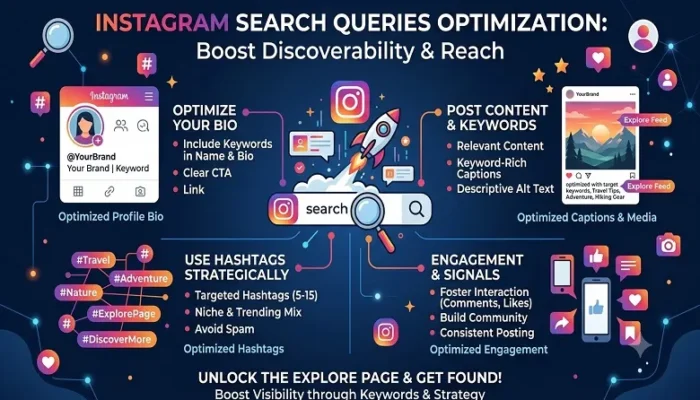
Instagram is no longer just a social media platform for sharing photos and videos—it’s also a powerful search engine. Every day, millions of users search for creators, brands, products, local businesses, and educational content using keywords instead of relying only on hashtags.
As Instagram’s search algorithm has evolved, simply posting attractive content is no longer enough. To improve visibility, creators and businesses need to optimize their profiles and posts so they appear when users search for relevant topics. This process is known as Instagram search queries optimization.
Whether you’re a content creator, influencer, small business owner, or digital marketer, understanding how Instagram organizes and ranks content can help you reach a larger audience without relying entirely on paid advertising.
In this guide, you’ll learn how Instagram search works, why optimization matters, and the strategies that can improve your discoverability.
What Is Instagram Search Queries Optimization?
Instagram search queries optimization is the practice of improving your Instagram profile and content so it appears for relevant searches within the platform.
Instead of focusing only on hashtags, optimization involves helping Instagram understand:
- Who you are
- What your account is about
- Which topics do you regularly cover
- Who your content is intended for
Instagram analyzes multiple signals—including your profile information, captions, keywords, engagement, and user behavior—to determine which accounts and posts best match a person’s search.
For example, someone searching for “SEO consultant,” “healthy recipes,” or “travel photographer” expects Instagram to display accounts that consistently publish relevant content. Proper optimization increases the chances of appearing in those search results.
How Instagram Search Works
Instagram’s search system is designed to deliver the most relevant results based on the words users type and the signals associated with each account or post.
When someone enters a search query, Instagram considers several factors before deciding which results to display.
Keywords
The words included in your:
- Username
- Display name
- Bio
- Captions
- Alt text
Help Instagram understand your niche.
If your profile consistently discusses digital marketing, for example, Instagram is more likely to associate your account with searches related to SEO, content marketing, or social media.
User Intent
Instagram doesn’t simply match exact words. It also tries to understand what the user wants to find.
For example, someone searching for:
- Wedding photographer
- Fitness coach
- Coffee shops
- Interior design ideas
expects different types of results depending on the search intent.
Creating content that directly answers those interests improves relevance.
Engagement Signals
Instagram also evaluates how users interact with your content.
Positive engagement includes:
- Likes
- Comments
- Saves
- Shares
- Profile visits
- Watch time
- Follows after viewing content
High-quality engagement tells Instagram that people find your content valuable.
Content Freshness
Recent, consistently published content often performs better than inactive accounts.
Maintaining a regular posting schedule helps Instagram understand that your account remains active and relevant.
Why Instagram Search Optimization Is Important
Many creators focus exclusively on the Explore page or hashtags, but Instagram search has become an increasingly valuable source of organic discovery.
Optimizing your account offers several benefits.
Better Visibility
Appearing in relevant searches exposes your content to users actively looking for information, products, or creators in your niche.
Higher Quality Followers
Search traffic often attracts people who already have an interest in your content, making them more likely to engage and follow your account.
Long-Term Organic Growth
Unlike paid advertising, optimized content can continue generating visibility long after it’s published.
Stronger Brand Authority
When your account consistently appears for industry-related searches, users begin to recognize your expertise and credibility.
Understanding Instagram Search Intent
One of the biggest mistakes creators make is optimizing for broad keywords without considering why users perform those searches.
Successful Instagram search query optimization starts with understanding intent.
Generally, Instagram searches fall into several categories.
Informational Searches
Users want to learn something.
Examples include:
- Beginner yoga
- SEO tips
- Healthy breakfast ideas
Educational content performs well for these searches.
Brand Searches
Users already know the business or creator they want to find.
Maintaining consistent branding across your username and profile makes these searches easier.
Local Searches
Many users search for nearby businesses or services.
Examples include:
- Coffee shop in Boston
- Wedding photographer Chicago
- Dentist near me
Adding location information to your profile and content can improve local discoverability.
Product Searches
Instagram has become an important product discovery platform.
Users frequently search for:
- Running shoes
- Home decor
- Skincare products
- Office furniture
Businesses should create content that answers common product-related questions instead of simply promoting sales.
Keyword Research for Instagram
Just as websites use SEO keywords, Instagram profiles benefit from using relevant search terms throughout their content.
However, keyword research for Instagram focuses on the language real users type into the search bar.
Good places to find keyword ideas include:
- Instagram search suggestions
- Related searches
- Customer questions
- Competitor profiles
- Industry terminology
- Frequently used phrases in your niche
Instead of targeting a single keyword repeatedly, build content around closely related topics.
For example, an SEO consultant might naturally include terms such as:
- SEO audit
- Technical SEO
- Keyword research
- Link building
- Local SEO
- Google rankings
This helps Instagram understand the overall subject matter of the account.
Optimize Your Profile for Search
Your profile is one of the strongest ranking signals Instagram uses.
A well-optimized profile clearly communicates your expertise to both users and the platform.
Choose a Relevant Username
Whenever possible, include your business name or primary area of expertise.
Avoid usernames filled with random numbers or unrelated words.
Write a Clear Display Name
Your display name is searchable.
Instead of using only your personal name, consider including your profession or niche.
Example:
Sarah | Nutrition Coach
This provides additional context for Instagram’s search system.
Create a Keyword-Focused Bio
Your bio should explain:
- Who you help
- What you offer
- Why someone should follow you
Rather than stuffing keywords, write naturally while describing your expertise.
Add Contact Information
Including contact details, website links, and business information improves credibility and provides a better user experience.
Write Better Captions for Search
Captions are another important element of Instagram search query optimization.
Instead of writing vague descriptions, create captions that naturally include words your audience might search for.
For example, rather than writing:
“Another great project completed!”
write:
“Here’s how I improved a local business’s SEO by optimizing technical issues, improving page speed, and building high-quality backlinks.”
This gives Instagram more context while providing useful information to readers.
How Instagram Understands Search Queries
Many people assume Instagram simply looks for an exact keyword match. In reality, the platform considers several signals before deciding which accounts, posts, or Reels deserve a place in the search results.
When someone types a phrase like “easy dinner recipes” or “SEO consultant”, Instagram tries to understand what they’re actually looking for. It compares the search query with information from your profile, captions, hashtags, and previous content to determine whether your account is relevant.
This is why Instagram search query optimization is about much more than adding a keyword to your bio. The platform rewards accounts that consistently publish useful content around a specific topic.
7 Instagram Search Query Optimization Techniques That Work
Instead of chasing shortcuts, focus on building an account that clearly communicates its expertise. These Instagram search query optimization techniques help both users and Instagram understand what your content is about.
1. Make Your Profile Instantly Understandable
Your profile is often the first thing Instagram evaluates.
Ask yourself:
- Can someone understand what I do within five seconds?
- Does my display name describe my expertise?
- Does my bio explain who I help?
For example:
Less effective
John Smith
Better
John Smith | SEO Consultant
The second option immediately tells both visitors and Instagram what the account focuses on.
2. Write Captions That Answer Questions
Captions should provide useful information, not just describe the photo.
Imagine you’re sharing a website audit.
Instead of writing:
“Finished another client project today.”
Try something more helpful:
“A slow website can reduce conversions and affect search visibility. In this audit, I fixed broken internal links, improved page speed, and optimized title tags to help increase organic traffic.”
This type of caption naturally includes relevant language while giving readers something valuable to learn.
3. Stay Focused on One Niche
One of the biggest reasons accounts struggle to appear in search results is inconsistency.
If today’s post is about fitness, tomorrow’s is about cryptocurrency, and next week’s is about travel, Instagram receives mixed signals about your expertise.
Choose a clear niche and build your content around it.
For example, if you work in digital marketing, your content might regularly cover:
- Technical SEO
- Keyword research
- Link building
- Google Search Console
- Content optimization
- Local SEO
Publishing related content over time strengthens topical authority.
4. Use Keywords Where They Make Sense
Effective Instagram search queries optimization doesn’t mean repeating the same phrase over and over.
Instead, include relevant terms naturally in places where users expect information, such as:
- Your display name
- Bio
- Captions
- Reel titles
- Image descriptions
- Story highlights
Natural writing is easier for people to read and gives Instagram enough context to understand your content.
5. Create Search-Friendly Reels
Reels have become one of Instagram’s strongest discovery tools.
To improve visibility:
- Start with a clear topic in the first few seconds.
- Add readable text on the screen.
- Use a descriptive cover image.
- Write a caption that explains the video’s main idea.
- Encourage viewers to watch until the end.
For example, instead of a cover that simply says “Watch This!”, use a title like “5 Technical SEO Mistakes That Hurt Rankings.”
A descriptive title tells viewers exactly what they’ll learn.
6. Write Alt Text That Describes the Image
Alt text was originally introduced to improve accessibility, but it also helps Instagram understand visual content.
A good description focuses on what actually appears in the image.
Example:
“A bakery owner decorating fresh chocolate cupcakes inside a small café.”
This is much more useful than repeating unrelated keywords.
7. Build Trust Through Consistency
Instagram Favours accounts that continue providing useful information over time.
Rather than posting ten times one week and disappearing for a month, create a schedule you can realistically maintain.
Consistency helps your audience know what to expect and gives Instagram more opportunities to recognize your expertise.
Common Mistakes That Reduce Search Visibility
Many creators unknowingly limit their reach because they follow outdated advice.
Using Too Many Hashtags
Adding dozens of hashtags doesn’t automatically improve discoverability.
Choose a smaller number of hashtags that accurately describe your content and audience.
Ignoring the First Sentence
The beginning of your caption often determines whether people continue reading.
Start with a statement, question, or insight that immediately tells readers what the post is about.
Posting Without a Clear Purpose
Every post should answer at least one question.
Ask yourself:
- What problem does this solve?
- What will someone learn?
- Why would they save or share it?
Helpful content naturally attracts stronger engagement.
Copying Competitors
Studying successful creators is useful, but copying captions or content ideas rarely builds long-term authority.
Share your own experiences, examples, and insights whenever possible.
Measuring Whether Your Strategy Is Working
Optimization isn’t something you do once and forget. Review your account regularly to understand what’s improving and where adjustments are needed.
Useful metrics include:
- Reach from search
- Profile visits
- Follower growth
- Saves
- Shares
- Average watch time on Reels
- Website clicks
If educational posts consistently generate more saves than promotional posts, that’s a sign your audience values practical content.
Use those insights to guide future posts.
Final Thoughts
Improving visibility on Instagram isn’t about finding a single trick or relying on one ranking signal. Successful Instagram search queries optimization comes from creating content that clearly communicates its topic, answers real questions, and delivers value to the intended audience.
A thoughtful Instagram search query optimization strategy combines a well-structured profile, informative captions, focused content themes, and consistent publishing habits. When you apply these Instagram search query optimization techniques naturally, Instagram has a better understanding of your account and is more likely to connect your content with people searching for related topics.
The most sustainable growth comes from becoming a trusted source within your niche. As you continue publishing useful, relevant content, your profile can build authority, attract engaged followers, and increase its visibility across Instagram’s search experience.
Frequently Asked Questions
A: It is the process of improving your profile and content so Instagram can better understand your niche and show your posts to people searching for related topics.
A: Yes, but they work best when they support well-written captions rather than replacing them. Clear profile information and relevant content remain essential.
A: Creating a descriptive profile, publishing content around a consistent niche, writing informative captions, optimizing Reels, and reviewing performance data regularly are among the most effective long-term strategies.
A: Growth depends on factors such as content quality, competition, consistency, and audience engagement. Some accounts notice improvements within a few weeks, while others may need several months of consistent publishing.