


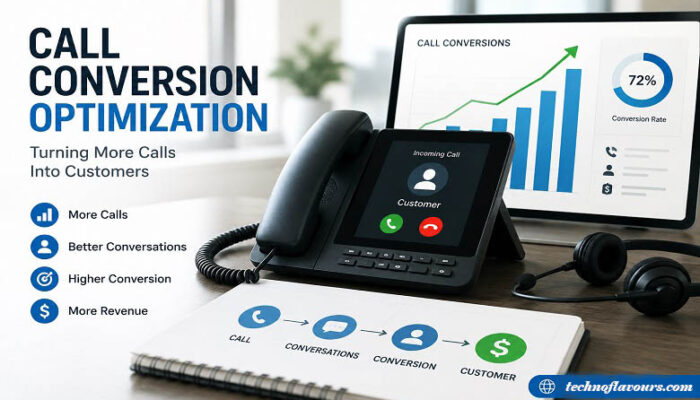
For many businesses, a phone call is still one of the most valuable ways to connect with a potential customer. People call when they want an answer, need help, want to compare options, or are ready to take the next step. However, getting people to call is only part of the process. The bigger challenge is turning those calls into qualified leads and paying customers. Call conversion optimization is the process of improving that entire experience. It involves making it easier for people to call, attracting the right callers, improving the quality of phone conversations, and measuring what happens after the call.
Whether a business gets phone leads through Google Search, paid advertising, social media, local listings, or its own website, a better call conversion strategy can help turn existing traffic into more meaningful business results.
What Does Call Conversion Optimization Mean?
Call conversion optimization focuses on increasing the number of valuable phone calls generated by a marketing campaign and improving the percentage of those calls that lead to a desired outcome.
The desired outcome will depend on the business. It could be:
- A new customer
- A booked appointment
- A consultation
- A service request
- A quote
- A reservation
- A qualified sales lead
It is important to understand that call conversion optimization is not simply about increasing call volume.
Imagine a company receives 500 calls but only 20 become customers. Another company receives 250 calls and gains 50 customers. The second company is generating fewer calls but achieving a better business result.
For this reason, businesses should focus on call quality and customer outcomes, not just the number of calls received.
Why Phone Calls Can Be Valuable Conversions
A phone call gives customers something that a standard webpage cannot always provide: immediate human interaction.
A potential customer may have questions about pricing, availability, service areas, product options, or a specific problem. Speaking with a knowledgeable representative can remove uncertainty much faster than asking the customer to search through several pages.
Phone calls can be particularly important for businesses where purchases or services require discussion, including:
- Home-service companies
- Healthcare providers
- Law firms
- Financial services
- Automotive businesses
- Travel companies
- Professional services
- Local retailers
For these businesses, improving the phone experience can have a direct effect on lead generation and sales.
Start by Understanding Your Customers
Before changing a website or advertising campaign, understand why people are calling.
Look at the questions customers commonly ask and the problems they are trying to solve.
For example, customers might regularly call to ask:
- How much does the service cost?
- Do you serve my location?
- Can I book an appointment today?
- How long does the service take?
- Do you provide emergency service?
- Which product should I choose?
These questions reveal what information customers need before making a decision.
Adding useful answers to your website can reduce uncertainty and help the right visitors feel more comfortable calling.
Make Your Phone Number Easy to Find
A customer should not have to search through a website to find a phone number.
Place the number in logical locations such as the website header, contact section, service pages, and relevant landing pages.
For mobile visitors, make the number clickable so they can call with a single tap.
A clear call-to-action can also make the purpose of the call easier to understand.
Instead of simply using:
Call Us
a business could use:
Call for a Free Estimate
or:
Speak With a Specialist Today
The best call-to-action depends on what the customer is likely to need.
Create Landing Pages That Support Calls
A landing page plays an important role in call conversion.
If someone arrives from a search advertisement, the page should match the message that brought them there. The visitor should quickly understand what the business offers and why it may be the right choice.
A useful landing page should normally include:
- A clear headline
- Relevant service information
- A visible phone number
- A strong call-to-action
- Trust signals
- Customer reviews or testimonials
- Important business details
- A clear explanation of the next step
Avoid overwhelming visitors with unnecessary information. Give them enough information to make an informed decision and make contacting the business straightforward.
Match Advertising with Search Intent
The quality of your phone leads often starts with the keywords and audiences used in your marketing campaigns.
Someone searching for a specific service is generally more likely to call than someone searching for general information.
For example, there is a major difference between:
“how does roof repair work”
and:
“roof repair company near me.”
The first search may indicate research. The second suggests that the person may be actively looking for a provider.
Understanding search intent helps businesses create better advertisements, landing pages, and calls to action.
The goal is to attract people who are most likely to need the product or service—not simply generate the largest possible amount of traffic.
Track Phone Calls from Marketing Campaigns
If phone calls are important to your business, they should be included in your measurement strategy.
Without call tracking, it can be difficult to know which marketing channels are actually generating valuable leads.
Call tracking can help businesses understand:
- Which campaigns generate calls
- Which keywords attract callers
- Which landing pages perform best
- When customers tend to call
- How long calls typically last
- Which calls are qualified
- Which calls result in appointments or sales
This information allows businesses to make better marketing decisions.
For example, a campaign that generates fewer calls may still be more valuable if those calls consistently produce customers.
Measure Qualified Calls Instead of Every Call
Not every phone call should be treated as a successful conversion.
Some callers may ask for directions, request information that is unrelated to your service, or call by mistake. Others may be highly interested prospects who are ready to buy.
Your business should define what a qualified call looks like.
Useful measurements can include:
- Call duration
- Reason for the call
- Qualified lead status
- Appointment booked
- Quote requested
- Sale completed
- Revenue generated
This makes it easier to identify which marketing activities are creating genuine business opportunities.
Improve the Customer Experience During the Call
Getting someone to call is only half the job.
The conversation needs to be helpful and professional.
People answering business calls should be able to understand the customer’s needs, provide accurate information, and explain what happens next.
Good call handling usually includes:
- A friendly and professional greeting
- Active listening
- Relevant questions
- Clear answers
- Helpful recommendations
- A specific next step
Depending on the business, that next step could be scheduling an appointment, sending an estimate, arranging a consultation, or completing a purchase.
A good conversation should leave the customer confident about what to do next.
Reduce Missed Calls
Missed calls can represent lost revenue, particularly for businesses that compete for local customers.
If someone calls and reaches voicemail, they may not wait for a response. They could simply contact another company.
Review your call data to understand when calls are most common and whether your staffing matches those periods.
Businesses should also have a process for responding to missed calls quickly.
A simple improvement in response time can sometimes produce more value than increasing advertising spend.
Use Customer Calls to Improve Your Website
Phone conversations can reveal valuable information about what customers actually want.
If callers repeatedly ask questions that are not answered on your website, consider adding that information to relevant pages.
For example, if customers frequently ask about service availability in a particular area, make that information easier to find.
If customers regularly ask about pricing, explain the factors that influence cost.
If callers frequently have the same concern before booking, address that concern through your website content or FAQs.
This creates a useful feedback loop:
Customer questions → Better content → More informed visitors → Better calls → Better conversions
Common Call Conversion Problems
Several simple issues can prevent businesses from getting the full value of their phone leads.
Difficult-to-Find Contact Information
If customers cannot quickly find your phone number, some will leave without taking action.
Weak Calls to Action
A generic “Contact Us” message may not explain why the customer should call.
Poor Mobile Experience
If a visitor cannot easily tap to call, the conversion process becomes unnecessarily complicated.
Unqualified Traffic
Broad advertising can generate many calls that have little commercial value.
Missed Calls
A strong marketing campaign cannot produce results if calls are regularly unanswered.
Poor Follow-Up
Some customers need additional information before they make a purchase. Without follow-up, good leads can disappear.
Measuring the Wrong Metrics
Call volume alone does not show whether a campaign is producing profitable customers.
How to Improve Call Conversion Rates
There is no single formula that works for every business. The best approach is to identify where customers are dropping out of the journey.
Start by measuring:
Visitors → Calls → Qualified Calls → Appointments → Customers
Then look for the weakest stage.
If few visitors call, improve the landing page, CTA, offer, and targeting.
If many people call but few are qualified, improve your advertising and keyword targeting.
And calls are qualified but sales remain low, look at call handling, pricing, objections, and follow-up.
This approach makes optimization more practical because every change is based on an identifiable problem.
The Role of AI and Call Analytics
Technology is making it easier for businesses to understand large volumes of customer conversations.
AI-powered call analysis can help identify recurring questions, common objections, customer concerns, and patterns in successful or unsuccessful calls.
For businesses receiving hundreds or thousands of calls, this can provide useful insight without requiring someone to manually review every conversation.
However, technology should support human decision-making rather than replace good customer service. Accurate information, professional communication, and genuine assistance remain essential.
Call Conversion Optimization and Revenue
The most important measurement is ultimately revenue.
A business should try to understand the relationship between marketing activity and customer value.
A useful model is:
Marketing Channel → Phone Call → Qualified Lead → Customer → Revenue
This allows businesses to identify which channels are genuinely contributing to growth.
For example, if paid search generates fewer calls than another channel but produces customers with higher average order values, it may be the more profitable source.
This is why call conversion optimization should be connected to sales data whenever possible.
Final Thoughts
Call conversion optimization is about more than getting customers to pick up the phone. It is about creating a smooth path from the first marketing interaction to a useful conversation and, ultimately, a successful customer relationship.
Start with the right audience and search intent. Make your phone number easy to find. Give visitors a clear reason to call. Create landing pages that build trust. Track the calls your marketing generates, distinguish qualified leads from low-value interactions, and make sure every customer receives a professional response.
Most importantly, measure what happens after the phone rings.
When businesses focus on qualified calls, customer experience, and revenue rather than call volume alone, their marketing becomes easier to evaluate and much more effective over time.