


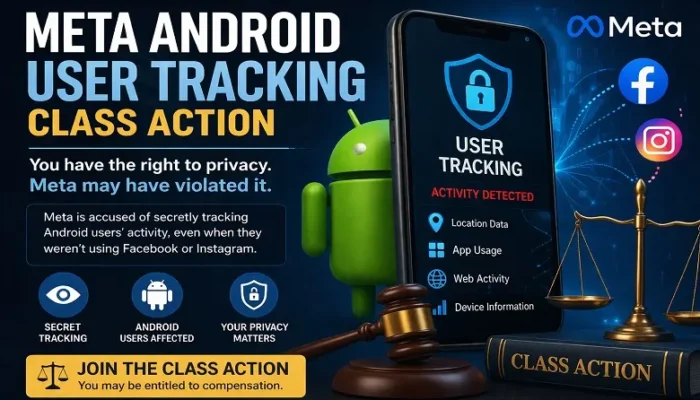
The Meta Android user tracking class action refers to a recent lawsuit accusing Meta of collecting and linking Android users’ browsing data to their personal profiles without proper consent. Unlike general privacy concerns that stay theoretical, this case is based on specific technical findings and legal claims that are now being examined in court.
Instead of speculation, the discussion around this lawsuit is grounded in how tracking tools, mobile apps, and operating systems interact in real-world conditions. To understand what’s at stake, it’s important to look closely at both the technology involved and the legal arguments being made.
What the Meta Android User Tracking Class Action Is About
The lawsuit alleges that Meta tracked user activity beyond its own platforms by collecting data from websites visited through Android browsers and linking that information to Facebook or Instagram accounts.
The key issue is not just data collection, but data connection.
According to the complaint, Meta may have:
- Captured browsing activity from external websites
- Identified users through app-level data
- Combined to build detailed user profiles
This turns what would normally be separate streams of data into a single, continuous record tied to an individual.
How the Tracking Allegedly Worked in Practice
To understand the mechanics, it helps to look at how a typical user interaction might have been processed.
When someone visits a website that includes Meta’s tracking technology (commonly known as Meta Pixel), that site sends information back to Meta’s systems. This is a standard practice used by many companies for analytics and advertising.
However, the lawsuit claims that Meta went further by linking that web activity with identifiers stored inside its mobile apps.
In practical terms, this means:
- A user opens a website in their browser
- The website contains the Meta tracking code
- The device also has Facebook or Instagram installed
- Data from both environments is connected
This connection is what allows browsing behaviour to be associated with a specific account, rather than remaining anonymous.
Why Android Devices Are Central to the Case
The Meta Android user tracking class action specifically focuses on Android users because of how the Android system operates.
Android allows a certain level of interaction between apps and system components. This flexibility is useful for many legitimate features, but it can also make it easier for data to move across different parts of the device.
The lawsuit suggests that Meta may have used this capability to:
- Transfer identifiers between apps and browsers
- Match browsing sessions with logged-in users
- Maintain continuity of tracking across environments
It is important to note that the case does not claim Android itself is defective, but rather that its design may have enabled this type of data linkage.
Types of Data Involved
The information potentially collected in this case goes beyond simple metrics like page visits. It includes patterns of behaviour that can reveal meaningful insights about a user.
Examples include:
- Websites visited and time spent on them
- Products viewed or purchased
- Search terms and browsing interests
- Interaction patterns such as clicks and scrolling
When combined, this data can create a detailed behavioural profile. Even if individual pieces of data seem harmless, the aggregation of that data increases its sensitivity.
The Legal Arguments Behind the Case
The Meta Android user tracking class action relies on several legal claims that are commonly used in privacy litigation, but applied here in a more technologically complex setting.
Expectation of Privacy
The lawsuit argues that users reasonably expect their browsing activity outside of an app to remain separate from their app-based identity.
Informed Consent
Another key issue is whether users truly consented to this type of tracking. While Meta may point to its terms of service, the argument is that those terms did not clearly explain the extent of cross-platform data linking.
Unauthorized Data Interception
Some claims suggest that the alleged tracking could be interpreted as intercepting user activity without proper authorization, depending on how the data transfer occurred.
Financial Benefit
The complaint also states that Meta may have benefited financially by using this data to improve ad targeting and increase revenue, which strengthens the case for damages.
Meta’s Position and Likely Defence
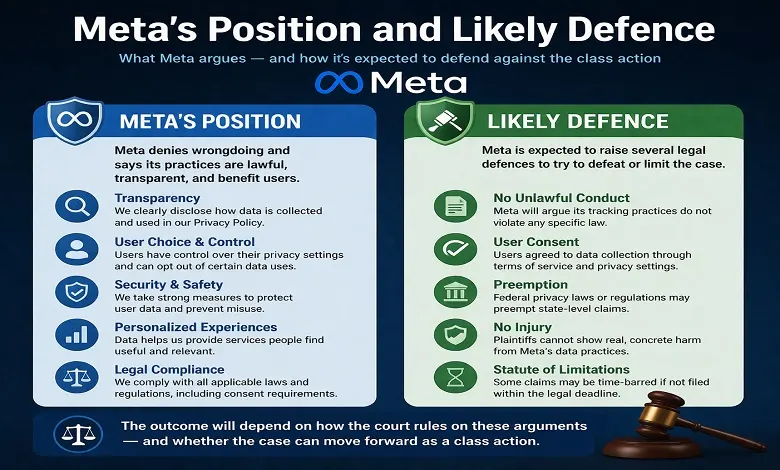
Meta has not admitted wrongdoing in this matter. Based on previous cases, the company is expected to defend itself by focusing on standard industry practices and user agreements.
Possible arguments include:
- Users accepted data collection policies when installing the apps
- Tracking technologies like pixels are widely used across the internet
- Data collected was either anonymized or not sensitive in nature
The strength of these arguments will depend on how the court interprets both the technical details and user expectations.
Why This Case Matters Beyond One Company
The Meta Android user tracking class action is significant because it addresses a broader issue: how data flows between different parts of a device.
Modern digital systems are no longer isolated. Apps, browsers, and services often interact in ways that are not visible to users. This case brings attention to that complexity and questions whether current privacy standards are sufficient.
If the court rules against Meta, it could lead to:
- Stricter limits on cross-platform tracking
- Clearer requirements for user consent
- Changes in how mobile apps handle external data
These changes would likely affect the entire tech industry, not just one company.
Possible Outcomes of the Lawsuit
At this stage, several outcomes are possible.
One scenario is a settlement, where Meta agrees to pay compensation without admitting fault. This is common in large-scale class action cases.
Another possibility is a court decision that sets a legal precedent. If that happens, it could redefine how companies are allowed to collect and combine user data.
Regardless of the outcome, the case is likely to influence future regulations and corporate practices.
What Users Should Take Away From This
The most practical takeaway from the Meta Android user tracking class action is that data collection is not always limited to a single app or service.
User activity can sometimes be connected across different environments, depending on how systems are designed.
While users cannot completely control how companies handle data, they can make informed choices by:
- Reviewing app permissions
- Limiting unnecessary app installations
- Using privacy-focused browsing tools
- Staying aware of how tracking technologies work
Final Perspective
The Meta Android user tracking class action highlights a shift in how digital privacy is being understood and challenged. It moves the conversation from simple data collection to the more complex issue of data integration across platforms.
At its core, the case is about whether users were fully aware of how their information was being used and whether companies should be allowed to connect that information in such detailed ways.
As the case progresses, it will likely play a role in shaping the next phase of privacy standards in the mobile and online ecosystem.